
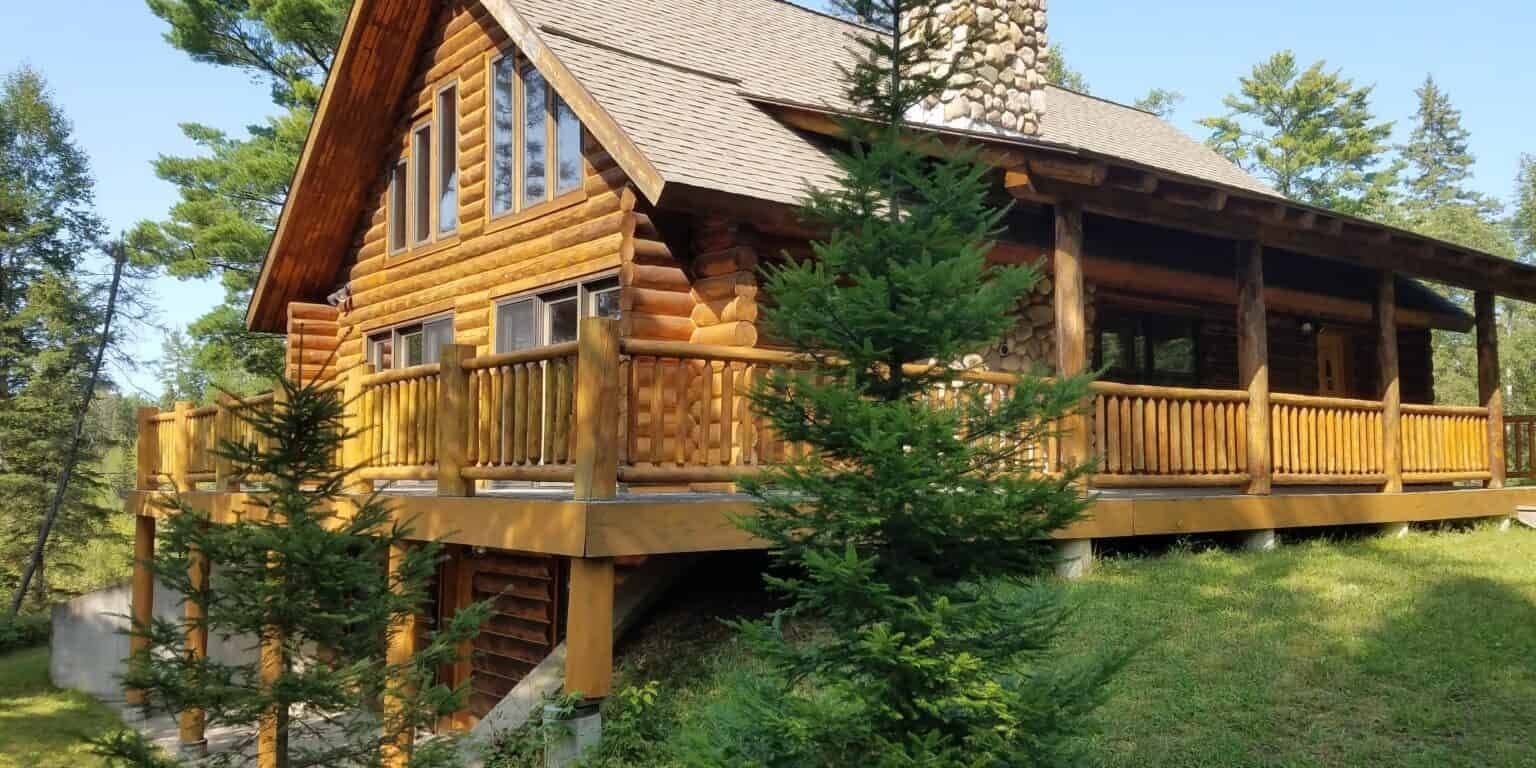
Log Home Insulation Services in Northern Michigan
Improving Comfort by Understanding How Your Log Home Performs
Log homes require a different approach to insulation than traditional framed houses. Seasonal movement, settling, moisture changes, and unique wall assemblies all affect how heat moves through the structure.
WEATHERWIZE helps log homeowners throughout Northern Michigan, the Upper Peninsula, and Northern Wisconsin improve comfort and energy performance through diagnostic-based insulation solutions. Before recommending materials or installation methods, we first determine where heat loss and air movement are actually occurring.
Diagnosing Insulation Issues Before Work Begins
A visual inspection only shows part of the picture. Log homes can develop hidden gaps from years of settling and seasonal movement, so testing helps identify where improvements will make the biggest difference.
Thermal Imaging Assessments
Thermal imaging shows temperature differences throughout walls, ceilings, and transitions that are difficult to identify by sight alone. In log homes, heat loss often occurs along log courses, settling gaps, corners, and areas where log walls meet framed sections. This helps identify missing insulation, compressed areas, and air leakage points before work begins.
Blower Door Testing
Blower door testing measures how much air moves through the home's exterior envelope. The results show how airtight the structure is and help identify areas where air sealing should be addressed alongside insulation. Because air leakage can significantly affect comfort, insulation and sealing often need to work together.
Insulation Options for Existing Log Homes
There is no single insulation material that works for every log home. The right choice depends on the home's construction, age, existing conditions, and the areas being improved.
WEATHERWIZE works with several insulation approaches:
Spray Foam Insulation
Spray foam is useful where insulation and air sealing need to work together. It expands to fill irregular spaces, making it a good option for areas with uneven surfaces, transitions, and difficult-to-seal gaps.
Blown-In Cellulose Insulation
Blown-in cellulose works well in accessible areas such as attics and certain floor cavities. It fills irregular spaces effectively and can provide additional insulation depth without requiring major structural changes.
Fiberglass Batt Insulation
Fiberglass batts are best suited for standard framed cavities, such as additions or accessible crawlspaces. Because full-log walls don’t have consistent cavities, batts are not always the right solution for log construction. We evaluate where each material makes sense, rather than forcing a single approach on every project.
How Air Sealing Affects Log Home Insulation
A log wall performs differently from a conventional framed wall. The logs themselves provide thermal mass, meaning they absorb heat, hold it, and release it gradually as temperatures change. That ability can help moderate indoor temperature swings, but it depends heavily on controlling air movement through the structure.
When outside air continually leaks in and conditioned air escapes, those frequent air exchanges work against the logs' thermal mass. The home loses heat faster, rooms feel draftier, and the log walls have less opportunity to help stabilize indoor temperatures. In that sense, air sealing is one of the most important forms of insulation in a log home.
Because logs naturally expand, contract, and settle, small gaps can develop between courses, at corners, and where log walls meet windows, doors, roofs, and other materials. Chinking and caulking close those pathways and create the continuous air and weather seal the wall needs to perform properly.
Additional insulation may still be important in roof systems, floors, and other framed areas, but the log walls themselves depend largely on proper caulking, chinking, and air sealing. If those seals have failed, adding insulation elsewhere will only address part of the problem. The best results come from reducing unwanted air infiltration first, then evaluating how the rest of the building envelope is performing.
The WEATHERWIZE Insulation Process
Every project begins with understanding what is happening inside the home. Thermal imaging, blower door testing, and a review of the existing structure help define the right scope before installation begins.
From there, we consider the home's construction type, log condition, existing chinking and caulking, prior insulation work, and areas needing improvement. Installation methods are selected based on what will perform best for that specific home.
Our team brings nearly 60 years of combined log home experience and certified restoration expertise to each project. After installation, we review completed work and verify that coverage and performance meet expectations.
Why Northern Michigan Homes Need Specialized Insulation Planning
Northern Michigan and the Upper Peninsula create demanding conditions for any building envelope. Heavy snowfall, lake-effect moisture, and repeated freeze-thaw cycles put added pressure on insulation, seals, and exterior materials.
Moisture management is especially important in this climate. The wrong insulation approach can create problems if it doesn’t account for how a log structure handles moisture movement. WEATHERWIZE considers the conditions your home faces year-round, not just average temperatures. Material selection and installation methods are based on how the structure performs in a Great Lakes climate.
Serving Log Home Owners Across Northern Michigan and Beyond
We provide log home insulation services throughout Northern Michigan, the Upper Peninsula, and Northern Wisconsin, including:
Marquette
Escanaba
Munising
Iron Mountain
Petoskey
Traverse City
Gaylord
For full details, visit our service area page.
Request a Free Quote
Featured Customer Review
Weatherwize did a great job. They got the job done within the time period they said they would. And the quality of their work was excellent. The guys are pleasant and professional. If you hire WeatherWize I doubt you will be disappointed.
Blog Posts
One of the most common questions we hear from homeowners is, “What does log repair cost?”
It is a fair question. Log homes are beautiful, valuable, and built to last, but when decay, water damage, failed finishes, or structural problems show up, the repair process can be more involved than many homeowners expect...
Maintaining a log home is essential to preserving its natural beauty, structural integrity, and value over time...
Maintaining a log home is essential to preserving its natural beauty, structural integrity, and value over time...
Common Questions About Log Home Insulation
Many insulation improvements can be completed without taking apart the log structure. The approach depends on the areas needing work, accessibility, and existing conditions.
Common signs include drafts, uneven temperatures between rooms, cold spots, and frost or condensation during extreme weather. Thermal imaging can help identify where heat loss is occurring.
No. Caulking and chinking create the weather and air seal, while insulation improves thermal performance. Both systems need to work together.
The best option depends on the home. Construction style, moisture exposure, settlement history, and existing materials all affect which approach will perform best.
Yes. We begin with an assessment process to understand the home's current condition and recommend improvements based on actual findings.
Log homes have natural thermal mass that helps regulate temperature changes, but settling gaps and lower insulation values compared with modern framed walls can affect efficiency. A properly maintained log home can perform well in cold climates when the building envelope is addressed correctly.
Contact WEATHERWIZE About Your Log Home Insulation
Improving a log home's comfort starts with understanding how the structure works. WEATHERWIZE combines diagnostic testing, restoration experience, and regional knowledge to recommend insulation solutions that fit your home. Request a free quote today.