
Borate Treatment for Log Homes in Northern Michigan and the Upper Peninsula
Request a Free Quote
Protecting Bare Logs From Insects and Fungal Decay
Borate treatment helps protect exposed wood from two common threats to log homes: wood-boring insects and fungal decay. It is especially useful during restoration, when old finishes have been removed, and the logs are bare enough to absorb the treatment.
Since 2008, WEATHERWIZE has specialized in log home restoration and maintenance throughout Northern Michigan, the Upper Peninsula, and Northern Wisconsin. With certified log home restoration professionals and approximately 60 years of combined team experience, we can help determine when borate treatment makes sense and where other repairs may be needed first.
How Borate Treatment Protects Log Homes
Borate penetrates bare wood rather than forming a coating on the surface. Once absorbed, it creates conditions that are unfavorable to many wood-destroying insects and fungi.
That gives it two important roles in log home preservation:
Insect Protection
Borates interfere with the biological processes of wood-boring insects, including carpenter ants and certain beetles.
Fungal Decay Protection
Borates prevent fungi responsible for wood decay, helping protect logs before deterioration becomes structural.
This makes borate particularly useful during restoration and preventive maintenance. It can help preserve sound wood, but it cannot rebuild logs that have already lost significant structural integrity. If decay has progressed too far, log repair or replacement may be the better solution.
When Should a Log Home Be Treated With Borate?
Borate works best when it has direct access to clean, unfinished wood. An existing stain, sealer, or other coating can prevent the treatment from penetrating deeply enough to do its job.
Common opportunities for treatment include:
Newly milled or unfinished logs before the first finish is applied
Logs exposed during a restoration project
Lower log courses and other areas with recurring moisture exposure
Wood showing early signs of fungal decay
Areas where wood-boring insect activity has been identified
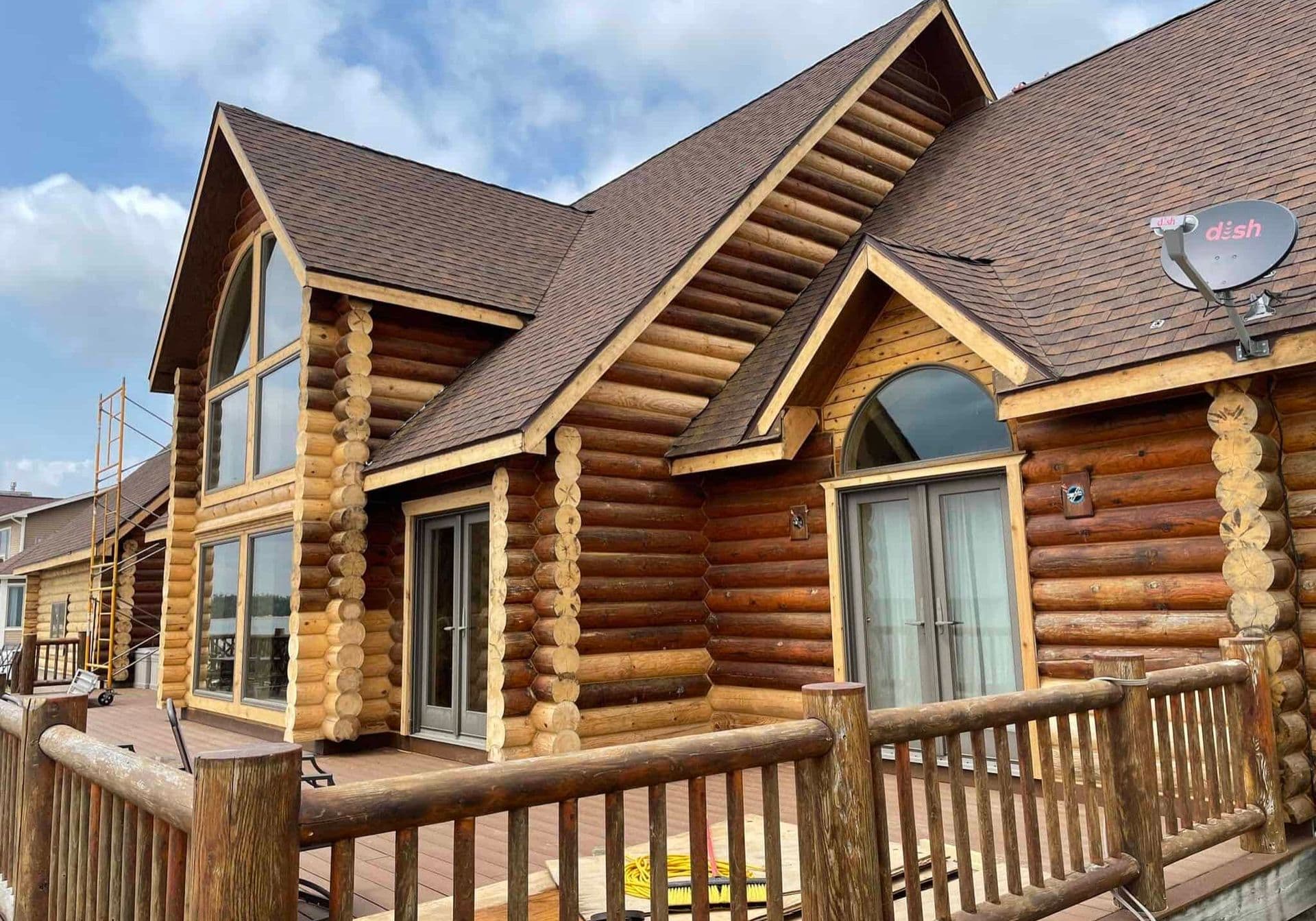
For restoration projects, borate treatment typically comes after the old finish has been removed and before new stain or sealer is applied. That timing matters. Once a new finish goes on, the wood is no longer readily accessible for treatment without stripping it again.
How WEATHERWIZE Applies Borate
A successful application starts with preparing the wood properly. Borate should not simply be sprayed over dirt, failed coatings, or sealed logs.
Expose and Evaluate the Wood
The logs must be clean and bare enough to absorb treatment. During restoration, this may involve media blasting or another stripping method. We also look at the condition of the logs before treatment begins. If sections are too deteriorated to preserve, those areas may require repair rather than borate alone.
Apply the Treatment
Depending on the surface and location, borate may be applied by spray, brush, or flood application. The objective is consistent absorption into the wood fibers rather than leaving a temporary film on the surface. Different areas of a log home may require different application techniques, particularly around lower courses, horizontal surfaces, joints, and difficult-to-reach sections.
Allow the Wood to Dry
The treatment needs adequate drying time before stain or sealer is applied. Applying a finish over the wood too quickly can interfere with drying and create moisture problems beneath the coating. Proper sequencing gives both the borate treatment and the finish that follows it the conditions they need to perform correctly.
Why Borate Treatment Makes Sense in the Great Lakes Climate
Log homes in Northern Michigan and the Upper Peninsula deal with a combination of moisture conditions that can be hard on exposed wood. Heavy snowfall can leave lower logs surrounded by moisture for long periods. Lake-effect weather and humid summers can keep the wood from properly drying. And shaded walls, roof runoff, splashback, and vegetation can keep certain sections wetter than homeowners realize.
Vacation cabins and second homes add another challenge. A moisture or pest problem may develop for weeks or months before anyone is there to notice it.
Borate treatment can be a valuable preventive measure when wood is already exposed for restoration or when a vulnerable area has been identified. Just as important, the source of excess moisture should also be addressed. Treating the wood without correcting repeated wetting does not solve the larger problem.
How Borate Treatment Fits Into Complete Log Home Restoration
Borate treatment is most effective as one part of a larger preservation strategy. During a typical restoration project, the sequence may include:
Removing the Existing Finish: Media blasting exposes clean wood and removes coatings that would block treatment.
Evaluating and Repairing Damage: Deteriorated logs are repaired or replaced where preservation is no longer practical.
Applying Borate Treatment: Exposed wood is treated where appropriate and allowed to dry.
Protecting the Surface: Staining and sealing help protect the wood from weather and UV exposure.
Closing Gaps and Openings: Caulking and chinking help reduce air and moisture infiltration through joints and transitions.
Borate addresses conditions within the wood, while exterior finishes and sealants help limit the moisture that can contribute to future problems. When active insects are also a concern, pest control can provide additional monitoring and treatment beyond the initial borate application.
Our Service Areas for Restoration Projects
We provide borate treatment and log home restoration services throughout Northern Michigan, the Upper Peninsula, and Northern Wisconsin. Our service area includes communities such as Marquette, Munising, Escanaba, Iron Mountain, Petoskey, Traverse City, Gaylord, and Rhinelander.
View our full service area to learn more about where we work.
Common Questions About Log Home Borate Treatment
Borates can remain in protected wood for many years, but they are water-soluble. Repeated moisture exposure can gradually cause the treatment to drain from exterior wood. When logs are stripped during a future restoration, applying borate again before refinishing may be appropriate.
Not effectively. Borate needs to penetrate bare wood fibers. An existing stain, sealer, or coating can prevent adequate absorption, which is why treatment is typically performed after stripping and before refinishing.
Borate products are commonly used for wood preservation in residential applications. Our team applies them according to product requirements and can explain any precautions associated with the specific treatment being used. Let us know about pets, children, or other household concerns before work begins.
The Upper Peninsula's snow, rain, humidity, and long periods of moisture exposure can create favorable conditions for wood decay and insects when logs remain damp. Borate treatment can provide valuable added protection for exposed wood, particularly during restoration or in areas with a history of moisture problems.
Yes. That is often the most practical time to apply it. Once old coatings have been removed, and the wood is exposed, our team can evaluate the logs, complete necessary repairs, apply borate where appropriate, and prepare the home for a new finish.
Ask WEATHERWIZE About Borate Treatment
If your logs are being stripped, showing early signs of decay, or attracting wood-boring insects, borate treatment may fit into the next stage of maintenance or restoration. Contact WEATHERWIZE to discuss your log home and get a free quote.