
Log Home Flashing and Splash Proofing
Request a Free Quote
Water Damage Prevention in Northern Michigan & the Upper Peninsula
Water can enter a log home in more places than most homeowners expect. You might notice a dark stain under a window after heavy rain, softening near a base log, or moisture collecting where the roofline meets the wall. In Northern Michigan, the Upper Peninsula, and Northern Wisconsin, those concerns are especially common because log homes are exposed to snowpack, spring melt, rain splash, and freeze-thaw cycles throughout the year.
WEATHERWIZE helps log home owners protect the areas where water is most likely to enter. Flashing and splash proofing work together as a first line of defense by directing moisture away from vulnerable parts of the structure before it has a chance to soak into the wood.
Why These Areas Matter
Log homes do not shed water as well as conventional homes do. The most vulnerable areas are usually where different parts of the structure meet, move, or are close to moisture.
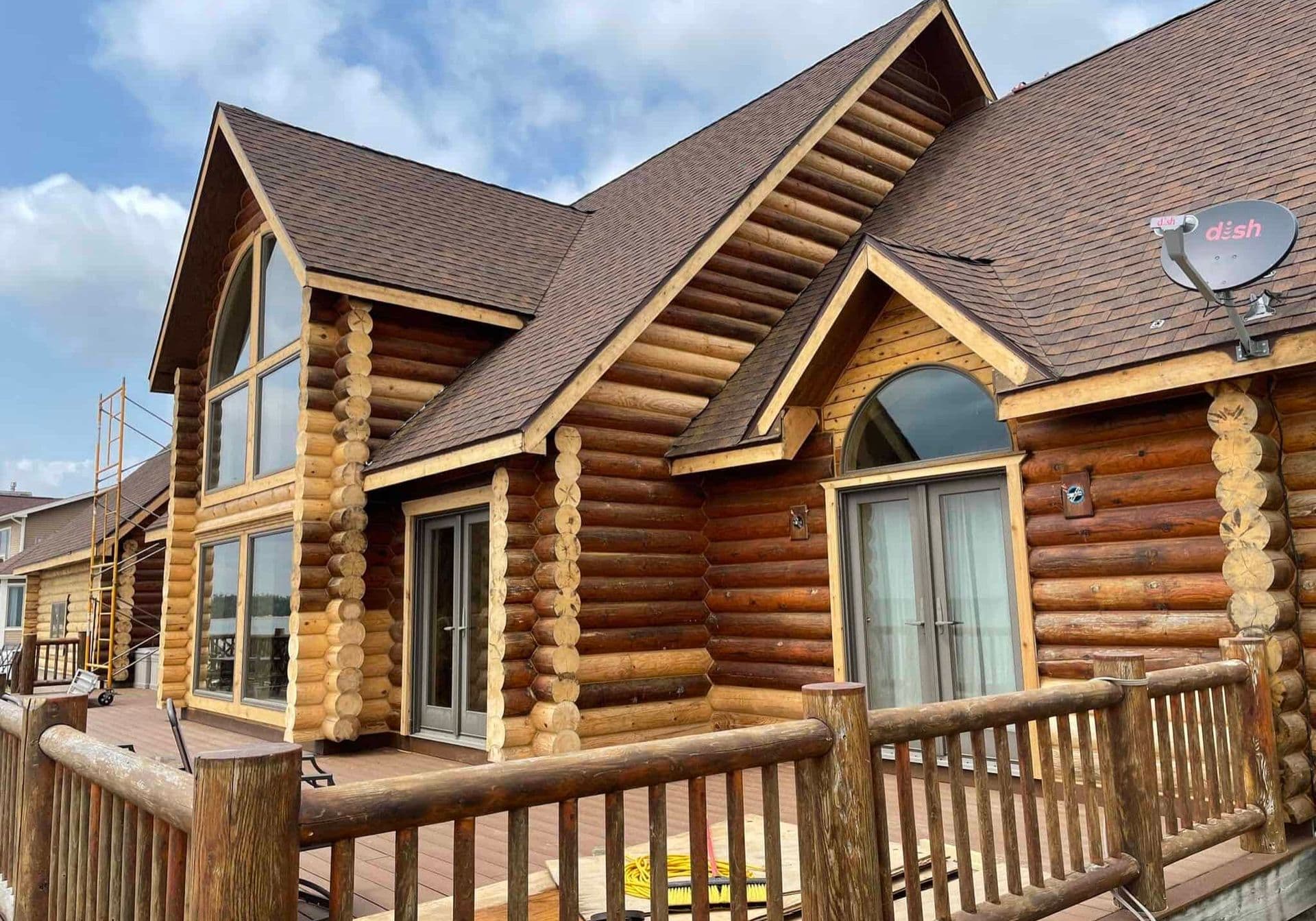
Chimney Bases: Water can collect where the chimney meets the roofline, especially if flashing is missing, lifted, or poorly sealed.
Dormers and Roof Transitions: These areas create natural channels for rain and snowmelt, making proper flashing essential.
Windows and Doors: Moisture can work behind frames if the surrounding seals or flashing are damaged or undersized.
Roof-to-Wall Connections: Where the roof meets the log wall, water needs a clear path away from the structure instead of into the wall system.
Deck Attachments: Deck connections can trap moisture against the home if they are not properly flashed and protected.
- Base Logs and Foundation Lines: Lower logs are exposed to rain splash, snow buildup, melting ice, and ground moisture for long stretches of the year. Over time, that exposure can lead to checking, staining, softening, and decay.
What Flashing and Splash Proofing Do
Flashing is a physical barrier installed at vulnerable connection points around the structure. It redirects water away from joints before it can travel inward. This is especially important around chimneys, dormers, roof transitions, windows, doors, and deck connections.
Splash proofing protects the base of the log home where ground-level moisture is the biggest concern. It helps defend against rain rebound, snowmelt saturation, and moisture moving up from the soil into the wood. Together, flashing and splash proofing protect both the upper transition points and the base-level areas that often receive the most weather exposure.
These services also support other log home repair and maintenance work. Caulking, sealing, and damp proofing perform better when water is directed away from the structure rather than constantly pushed against it.
Featured Customer Review
Weatherwize did a great job. They got the job done within the time period they said they would. And the quality of their work was excellent. The guys are pleasant and professional. If you hire WeatherWize I doubt you will be disappointed.
Blog Posts
One of the most common questions we hear from homeowners is, “What does log repair cost?”
It is a fair question. Log homes are beautiful, valuable, and built to last, but when decay, water damage, failed finishes, or structural problems show up, the repair process can be more involved than many homeowners expect...
Maintaining a log home is essential to preserving its natural beauty, structural integrity, and value over time...
Maintaining a log home is essential to preserving its natural beauty, structural integrity, and value over time...
The WEATHERWIZE Approach
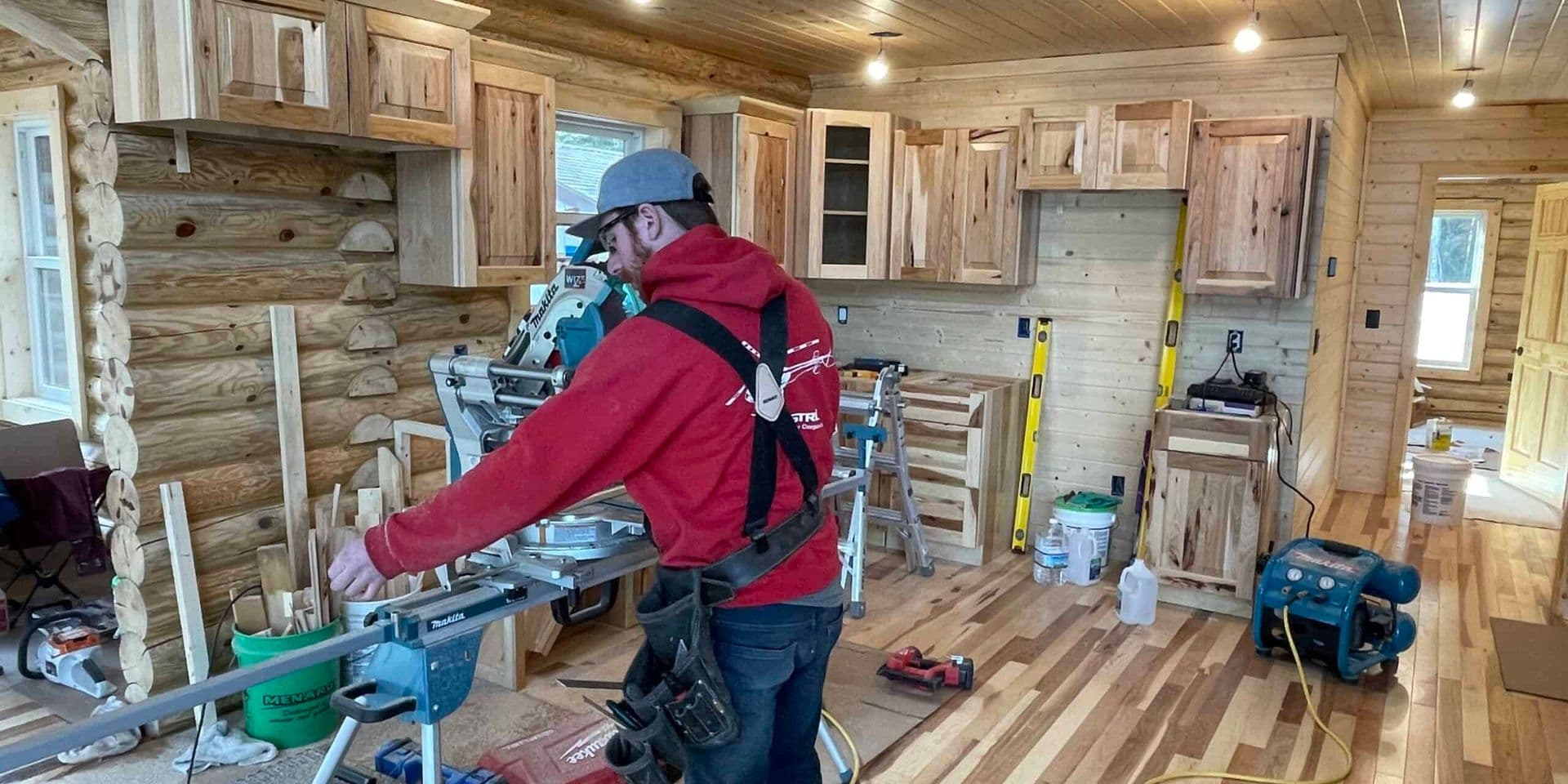
Every log home sits a little differently, so we start by looking at the structure and the site around it. Ground slope, foundation height, roof valleys, overhang depth, and existing moisture damage all affect the right solution. Older Upper Peninsula log homes, for example, often have short overhangs that leave wall transitions more exposed than they should be.
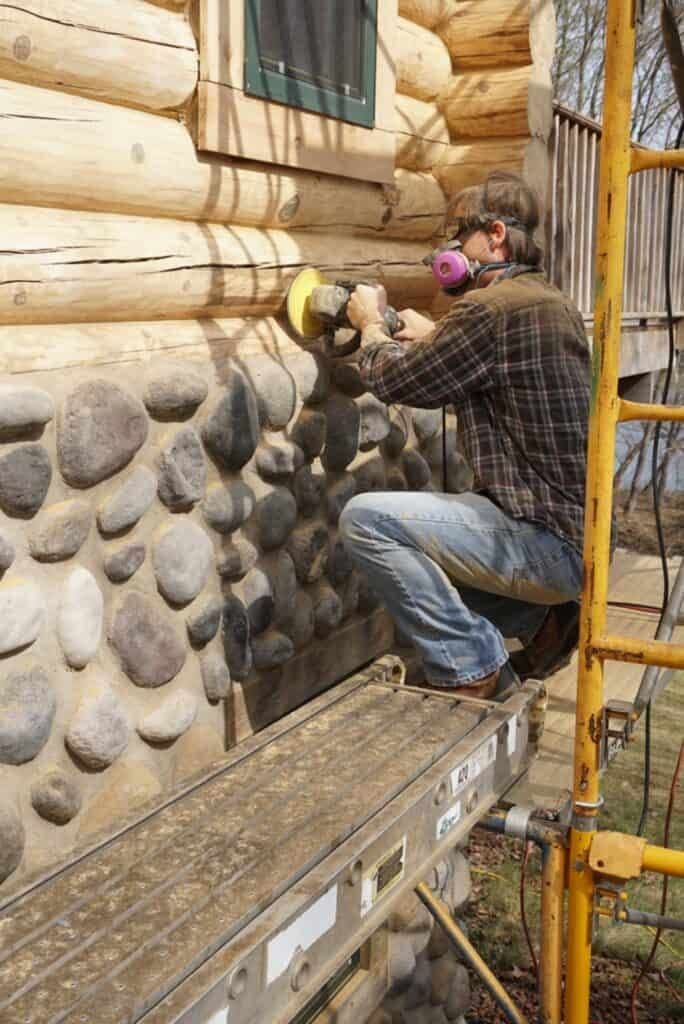
Preparation is just as important as the finished product. If old flashing is rusted, lifted, poorly lapped, or installed over damaged material, it needs to be corrected before new protection is added. We also account for how logs expand, contract, and shift through the seasons, because flashing that cannot move with the structure will eventually fail.
For sealing and related moisture protection, we use trusted products from manufacturers such as Sashco, Permachink, Sansin, and Outlast Q8. The right product depends on the wood, exposure level, and application point, not a one-size-fits-all recommendation.
Built for Great Lakes Weather
The Great Lakes climate is hard on log homes. Heavy snow, long wet seasons, deep frost, and repeated freeze-thaw cycles all increase the risk of moisture intrusion. What looks like a small stain or gap can become a larger log home repair issue if water is allowed to keep entering the same area.
WEATHERWIZE brings more than 60 years of combined log home experience to homes across Northern Michigan, the Upper Peninsula, and Northern Wisconsin. Our work is shaped by the realities of this region: the soil, the weather, the way older cabins were built, and how log homes shift over time.
If you’re seeing signs of moisture around your windows, doors, foundation, roofline, or base logs, flashing and splash proofing may be the protection your log home needs before the damage spreads.
Areas We Serve
We serve log home owners across Northern Michigan, the Upper Peninsula, and Northern Wisconsin, including Marquette, Munising, Escanaba, Iron Mountain, Petoskey, Traverse City, and Northern Wisconsin Great Lakes communities. For the complete list, visit our full service area.
Common Questions About Log Home Flashing and Splash Proofing
It can, in most cases, but the compatibility between the splash-proofing treatment and the existing finish matters for long-term adhesion and performance. Surface preparation is key. We evaluate what's already on the wood and whether any prep work is needed before treatment. Skipping this step results in finishes that don't hold up through seasonal cycles.
The biggest difference is the movement of logs. Logs expand and contract seasonally, applying stress to every junction. Standard flashing assumes a relatively stable substrate. On log homes, flashing at roof-to-wall connections, windows, and decks must accommodate dimensional change, or it pulls away over time. Log-to-frame transitions also create material compatibility challenges absent in frame construction.
Early installation outperforms corrective installation by preventing accelerated deterioration. In the Upper Peninsula and Northern Michigan, base logs and roof junctions on newer homes accumulate moisture stress in the first few seasons. Addressing flashing and splash proofing proactively prevents stress from compounding before becoming structural.
Talk to a Log Home Moisture Expert in Northern Michigan
If you're seeing signs of water intrusion at roofline junctions or base logs, or if your home hasn't had a moisture assessment recently, reach out to request an estimate or discuss your log home's situation with someone who knows this region.